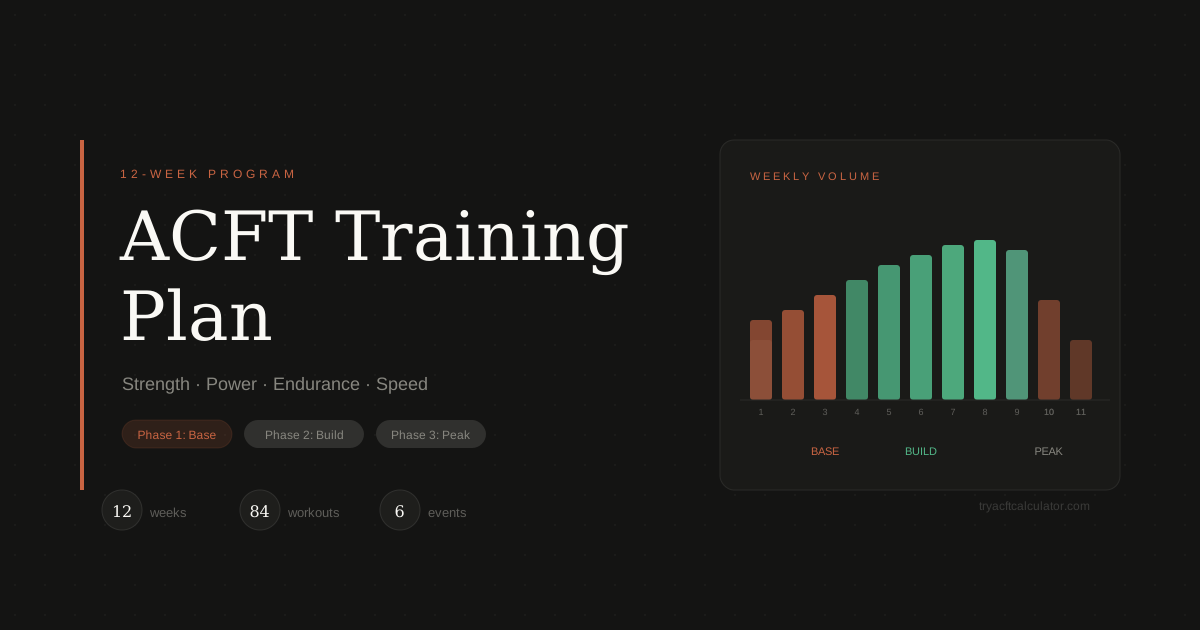
Week-by-week ACFT training plan with periodization, event-specific programming, assessment week, nutrition, and recovery strategies.
A random mix of workouts won't max your ACFT score. To peak for all six events at once, you need a structured plan. It has to build each physical quality in the right order, manage fatigue, and sharpen event-specific skills at the right time. This 12-week program does exactly that.
Before you start Week 1, use the ACFT calculator to score your current numbers across all six events. Your baseline tells you which events need the most development and whether any are at immediate risk of failing. That info should shape how aggressively you prioritize certain training blocks in this plan.
Assessment Week: Establishing Your Baseline
Before beginning the 12-week program, spend one week testing yourself on all six events. Space the tests across 3 days so cumulative fatigue doesn't tank your numbers.
Day 1: MDL 3RM test + SPT (2 attempts, measure best throw)
Day 2: HRP 2-minute max set + PLK max hold
Day 3: SDC simulation (timed) + 2MR timed run
Record every result and plug them into the ACFT calculator to get your current point total. Sort your events from lowest to highest score. That sorted list is your training priority order. Your bottom two events deserve the most programming emphasis.
What to look for:
- Any event below 60 points is a failing event and needs immediate priority attention
- Any event scoring 60 to 70 points is passing but fragile. One bad test day could push it below the threshold.
- Events scoring 80+ are strong. They need maintenance, not development.
Your assessment results also set your initial training loads for the program. The deadlift percentages below assume you know your 3-rep max. If you tested it in the assessment, use that number. If you estimated it, start conservatively and adjust upward in week 2.
Program Overview: Three Phases, Twelve Weeks
Phase 1 (Weeks 1 to 4): Base Building High volume, moderate intensity. Build aerobic capacity, establish movement patterns for the deadlift and power throw, accumulate push-up and plank volume, and introduce SDC component work.
Phase 2 (Weeks 5 to 8): Specific Development Intensity climbs significantly. Event-specific training replaces general conditioning work. Full SDC simulations, 2MR pace runs, HRP test simulations, and near-max deadlift sets are the hallmarks of this phase.
Phase 3 (Weeks 9 to 12): Peaking and Taper Volume drops, specificity increases. Week 10 includes a full ACFT simulation. Weeks 11 and 12 are a deliberate taper so your body recovers fully for test day.
Equipment Required
- Hex bar (trap bar) or access to a gym with one
- Kettlebells (40 lbs minimum; 2 x 40 lbs for SDC simulation)
- 10-lb medicine ball (for SPT practice)
- Pull-up bar
- Measured running route or track (400m or measured mile)
If you have no gym access, alternatives are noted for each session.
Phase 1: Base Building (Weeks 1 to 4)
Phase 1 prioritizes movement quality, connective tissue adaptation, and aerobic base development. Resist the urge to train at high intensity. Heavy loads and maximum efforts at this stage produce injury, not fitness.
Weekly Schedule Template
| Day | Primary Focus |
|---|---|
| Monday | Strength Foundation |
| Tuesday | Push-Up and Core Endurance |
| Wednesday | Aerobic Base Run |
| Thursday | Power and Agility |
| Friday | Strength + SDC Components |
| Saturday | Long Aerobic Run |
| Sunday | Rest or light mobility |
Monday: Strength Foundation
- Hex bar deadlift: 4 x 6 at 65 to 70% of your 3RM
- Romanian deadlift: 3 x 10 at moderate weight (hip hinge pattern reinforcement)
- Goblet squat: 3 x 12 (quad strength development)
- Farmers carry: 3 x 40 yards at heavy weight
- Plank: 3 x max time, stop at 60 seconds if under that limit
No gym alternative: Replace hex bar work with single-leg Romanian deadlifts using a heavy backpack and goblet squats holding something heavy.
Tuesday: Push-Up and Core Endurance
- Hand-release push-ups: 4 x max reps, 2-minute rest between sets
- Pike push-ups: 3 x 10 (shoulder strength)
- Hollow body holds: 3 x 30 seconds
- Dead bug: 3 x 10 per side
- Side plank: 3 x max hold per side
- Plank: 3 x 60 seconds
Focus: Every HRP set should use proper hand-release technique. If you're shortchanging the release when tired, reduce reps. Quality over quantity.
Wednesday: Aerobic Base Run
- Easy run: 20 to 30 minutes at a pace you can hold a full conversation (conversational pace)
- Strides: 6 x 100m at 80% effort, full recovery between each
- Total: about 3.5 to 4 miles
The easy pace matters. Many soldiers run their "easy" days too hard and stack up fatigue that limits intensity on hard days. If you can't speak in full sentences, you're going too fast.
Thursday: Power and Agility
- Medicine ball overhead throw (SPT practice): 5 x 4 attempts, focus on hip drive mechanics not throwing distance
- Broad jump: 4 x 4 repetitions (ground power development)
- Box jump: 4 x 5 (reactive power)
- Lateral shuffle drills: 4 x 25m each direction (SDC lateral preparation)
Friday: Strength + SDC Component Training
- Hex bar deadlift: 3 x 5 at 70 to 75%
- Sled drag simulation: 4 x 20m (drag a heavy kettlebell backward using a strap, mimics the SDC drag phase)
- Kettlebell farmers carry: 4 x 40m
- Lateral shuffle: 3 x 25m each direction
Saturday: Longer Aerobic Run
- Easy run: 30 to 40 minutes
- 2 x 800m at goal 2MR pace + 15 seconds per lap, with 3-minute rest between intervals
Use the two-mile run calculator to figure out your goal pace. If your goal is 16:00, your 800m goal pace is 4:00 per 800m. The +15 seconds makes this manageable in Phase 1.
Phase 1 Key Focus Points
Add 5 lbs per week to your deadlift on the Monday session. If progress stalls, keep the load the same and focus on more total reps.
Track your weekly plank time and your 800m pace every two weeks to confirm you're making progress. Your push-up count should go up by 3 to 5 reps per set by the end of week 4 compared to week 1.
Phase 2: Specific Development (Weeks 5 to 8)
Phase 2 raises the intensity and introduces full event simulations. You're no longer just building general physical capacity. You're training the specific events.
Changes from Phase 1
- Deadlift intensity jumps from 65 to 70% up to 80 to 85%
- SDC component work becomes complete SDC simulation
- Run intervals shift from base aerobic to tempo and race-pace work
- HRP sessions include timed 2-minute simulation sets
Monday: Strength Development
- Hex bar deadlift: 5 sets, working up to 3 reps at 80 to 85% of 3RM on the final set
- Romanian deadlift: 4 x 8
- Farmers carry: 4 x 50 yards, heavier than Phase 1
- Plank: 2 x max hold. Target: beat your Phase 1 best by 15+ seconds
Tuesday: Push-Up Volume
- Hand-release push-ups: 5 x max reps with 90-second rest (shorter rest piles on fatigue)
- Weighted push-ups (vest or plate on back): 3 x 8 to 10 reps
- Tricep dips: 3 x 15
- Core circuit: 3 rounds of (plank 60 sec + side plank 30 sec each side + dead bug 8 per side)
Wednesday: Interval Running
- Warm-up: 10 minutes easy
- 6 x 400m at your goal 2MR pace per mile with 90-second rest between intervals
- Cool-down: 10 minutes easy
- Total: about 4 to 4.5 miles
This is your primary aerobic development session. The 400m intervals teach your legs to run at target pace under controlled fatigue. By the end of Phase 2, these should feel much easier than they did in week 5.
Thursday: Power Development
- SPT practice: 6 x 3 attempts with focus on maximum distance. Not just form now, push for distance.
- Hang clean or explosive shrug: 4 x 5 (develops the hip-extension power that drives the SPT)
- Box jump: 4 x 5 at maximum height
- Sprint starts: 8 x 20m (SDC and overall speed development)
Friday: Full SDC Simulation
Complete the SDC sequence as close to test conditions as possible:
- Sprint 25m
- Drag a loaded sled or kettlebell 25m backward (use strap, 90 lbs or closest available)
- Lateral shuffle 25m left and 25m right
- Carry two 40-lb kettlebells 25m
- Sprint 25m back
Do 4 complete rounds with 3-minute rest between each round. Time every round. Target sub-2:30 by end of Phase 2.
If you don't have exact ACFT equipment, use closest equivalents. Drag a heavy duffle bag instead of a sled. Swap in heavy dumbbells for kettlebells.
Saturday: Tempo Run
- 10 minutes easy warm-up
- 2 x 1 mile at goal 2MR pace (not faster, exact pace practice)
- 2 x 800m at 5 seconds per lap faster than goal pace (speed work)
- 10 minutes easy cool-down
Phase 2 Benchmarks (End of Week 8)
By the end of Phase 2, your numbers should be tracking toward your test goals:
- Deadlift: Within 20 lbs of your ACFT target weight for 3 reps
- HRP: 30+ reps in a 2-minute simulation
- Plank: 3:00+ in a single hold
- 2MR training run: 800m pace consistent with your target finish time
- SDC simulation: Under 2:25 for a complete sequence
If you're significantly off any benchmark, extend Phase 2 by one week before moving to Phase 3. The peak phase can't create fitness you haven't built. It can only express what's there.
Phase 3: Peaking and Taper (Weeks 9 to 12)
Phase 3 does two things. It sharpens event-specific performance, then lets your body recover fully before test day. Volume drops significantly while intensity stays high for 2 more weeks before the taper.
The most common Phase 3 mistake is refusing to reduce training volume. Soldiers who have been training hard for 8 weeks feel uncomfortable cutting load. They add extra sessions "just in case." This is wrong. Fitness gained in training takes 7 to 14 days to express fully. The taper is not optional. It's part of the program.
Monday: Heavy Strength
- Hex bar deadlift:
- Week 9: Work to a heavy 3-rep set at 90 to 92%
- Week 10: 3-rep set at 93 to 95%
- Week 11: 3-rep set at 87% (deload, lighter than previous two weeks)
- Week 12 (test week): 3 x 3 at 60%, movement activation only
- Farmers carry: 2 x 50 yards at max weight
- Plank: 1 x max hold (track weekly progress)
Tuesday: Push-Up Specificity
- HRP 2-minute simulation: 1 x full 2-minute max set. Treat this as a real test.
- Rest 5 minutes
- HRP volume: 3 sets at 80% of your 2-minute max with 2-minute rest
- No other upper-body work. Protect your pressing strength for the simulation.
Wednesday: 2MR Tune-Up
- Warm-up: 10 minutes easy
- 4 x 400m at race pace with 75-second rest (less rest than Phase 2, more race-like)
- Cool-down: 10 minutes easy
- Week 11: Reduce to 3 x 400m
- Week 12: 2 x 400m + 10-minute easy run
Thursday: Power and Speed
- SPT: 4 x 3 attempts at maximum effort. Push for distance, not just form.
- Sprint starts: 6 x 20m
- Broad jumps: 3 x 3 (explosive power maintenance)
Friday: SDC Practice
- 2 full SDC simulations at race effort, with 5 minutes rest between
- Focus entirely on transitions and pacing. These are skills refinement, not just conditioning sessions.
- Week 11: 1 SDC simulation only
- Week 12: Skip. Full rest.
Saturday: Easy Shakeout Run
- 20 to 25 minutes easy run. Don't push pace at any point.
- This maintains aerobic activation without creating fatigue.
Week 10: Full ACFT Simulation
In week 10, run one complete ACFT simulation in the correct event order with rest periods:
MDL (3RM attempt) then SPT (2 attempts) then HRP (2-minute max) then SDC (1 timed run) then PLK (max hold) then 2MR (timed)
This is the most important training session of the 12 weeks. It shows how your events perform under cumulative fatigue, identifies any remaining weaknesses, and builds confidence in your ability to complete the test. Enter your simulation scores in the ACFT calculator to confirm you're on track.
Week 12: Test Week Protocol
The final week before your ACFT:
- Day 1: Light deadlift (60%), 3 x 3. Easy 15-minute run.
- Day 2: Push-ups: 2 x 10 at comfortable pace. Plank: 1 x 90-second hold.
- Day 3: Easy 15-minute jog.
- Days 4 and 5: Complete rest. Sleep a minimum of 8 hours each night.
- Test day: Dynamic warm-up before events begin. No surprises. You've prepared for this.
Event-Specific Test Day Tips
MDL
Take two warm-up sets (50% and 75% of target weight) before your scored attempts. First scored attempt should be 5 to 10 lbs below your target to build confidence. See the ACFT Deadlift guide for full attempt strategy.
SPT
Do 3 to 4 practice throws at 70% effort before your scored attempts. Focus on the hip-drive sequence. Your arms contribute less than you think. See the power throw calculator for scoring.
HRP
Start at a sustainable pace, roughly 1 rep every 2.5 seconds. Don't sprint the first 30 seconds. Accelerate in the final 30 seconds when you hear the 30-second call.
SDC
Practice your transition footwork in the final two weeks. The seconds lost at cone pivots are the easiest to recover.
PLK
Take a full breath, squeeze your glutes maximally, and find a focus point 12 to 18 inches in front of you. Breathe slowly and rhythmically. The first "wall" of discomfort at 60 to 90 seconds is not the end. Hold through it.
2MR
Start at or slightly slower than your target pace. Don't go out fast in mile 1. If you still feel good at 1.5 miles, accelerate then.
Nutrition Support
Nutrition isn't a supplement to training. It's part of the training system. Without enough fuel and recovery nutrients, the adaptations this plan is designed to produce will be slower and less complete.
Daily Targets
Protein: 0.7 to 1.0 grams per pound of bodyweight per day. This is the single most impactful nutritional change for soldiers training strength and endurance at the same time. Prioritize protein at every meal.
Carbohydrates: Don't restrict carbohydrates during this program. Carbs fuel the aerobic and anaerobic conditioning work, and low carb intake directly degrades your 2MR and SDC performance.
Total calories: Maintain caloric balance or a slight surplus during Phases 1 and 2. A significant caloric deficit will slow strength development and impair recovery.
Pre-Training Meals
Train 1.5 to 2 hours after a meal with 40 to 60g of carbohydrates and 20 to 30g of protein. Avoid training on a completely empty stomach for sessions longer than 45 minutes.
Test Day Nutrition
Eat a familiar, carbohydrate-moderate meal 2 to 3 hours before the test. Nothing new on test day. Hydrate well. Begin the day with 16 oz of water. Caffeine (if you use it) should be taken 30 to 45 minutes before the test starts.
Recovery Protocols
Training breaks down tissue. Recovery rebuilds it stronger. This plan assumes you take recovery as seriously as training.
Sleep: Aim for 7 to 9 hours per night. Growth hormone, which drives muscle protein synthesis and connective tissue repair, is released mostly during deep sleep. Consistently sleeping 6 hours or less will meaningfully hurt your gains from this program.
Active recovery: On Sunday (rest day), 20 to 30 minutes of walking or light movement increases circulation without adding training stress. It beats complete inactivity for clearing out the fatigue products that pile up during the week.
Foam rolling and soft tissue work: 10 minutes of foam rolling on major muscle groups (quads, hamstrings, lats, upper back) after training improves recovery quality and keeps you mobile for the movement patterns in this plan.
Deload awareness: If you feel constantly fatigued, sleep quality drops, or performance regresses for more than two sessions in a row, take an unplanned deload day. This program builds in deliberate deloads in weeks 11 and 12, but the body sometimes signals earlier. Listen to those signals.
Tracking Your Progress
Log every session and enter weekly performance in the full ACFT calculator. Save results to compare across weeks. Use the event-specific calculators to track progress toward scoring targets:
- Deadlift score tracker
- Power throw score tracker
- Push-up score tracker
- SDC score tracker
- Plank score tracker
- 2MR score tracker
For event-specific technique and training, check the dedicated guides: ACFT Deadlift Tips, ACFT Plank Tips, and the ACFT Scoring Guide for exactly how points are allocated across each event.
Frequently Asked Questions
Can I do this plan alongside regular unit PT? Yes, with adjustments. When your unit runs, swap that in for the Wednesday or Saturday aerobic session when the distance and intensity are comparable. For strength PT days, coordinate so you're not doing a heavy deadlift session the night before a unit lifting day. The key is managing total weekly training load. You're adding to existing PT, not replacing it entirely.
What if I only have 8 weeks? Start in Phase 2 and run a full Phase 3. Skip Phase 1 only if you have an established aerobic base and are actively training. If you've been sedentary, 8 weeks is enough time to make meaningful progress but not enough for full development. Prioritize failing events ruthlessly.
How much can I expect to improve in 12 weeks? Soldiers with an established training base typically improve total ACFT scores by 30 to 60 points over 12 weeks. Soldiers returning from injury, profiles, or periods of low activity can see larger initial gains. The fastest improvements usually come in push-ups, plank, and SDC transitions. Deadlift and 2MR gains are more gradual but meaningful.
What if I plateau mid-program? First, audit your recovery. Sleep, protein intake, and total training volume are the most common plateau causes. If those are adequate, try increasing the load by a smaller increment (2.5 lbs rather than 5 lbs on the deadlift) or adding one extra set of the lagging exercise per week. Most plateaus are brief. One or two deload sessions often reset progress.
Should I do this plan alone or with a training partner? A training partner helps a lot with several events. They can grade your HRP form, accurately time your SDC, and keep you accountable during plank holds. If you have access to a motivated training partner with similar event profiles, train together. If your event weaknesses differ, coordinate so you train your shared events together and your individual events separately.
Free Calculator
Ready to check your score?
Use the free ACFT calculator to instantly score all 6 events based on official FM 7-22.02 standards.
Open ACFT Calculator →Related Articles
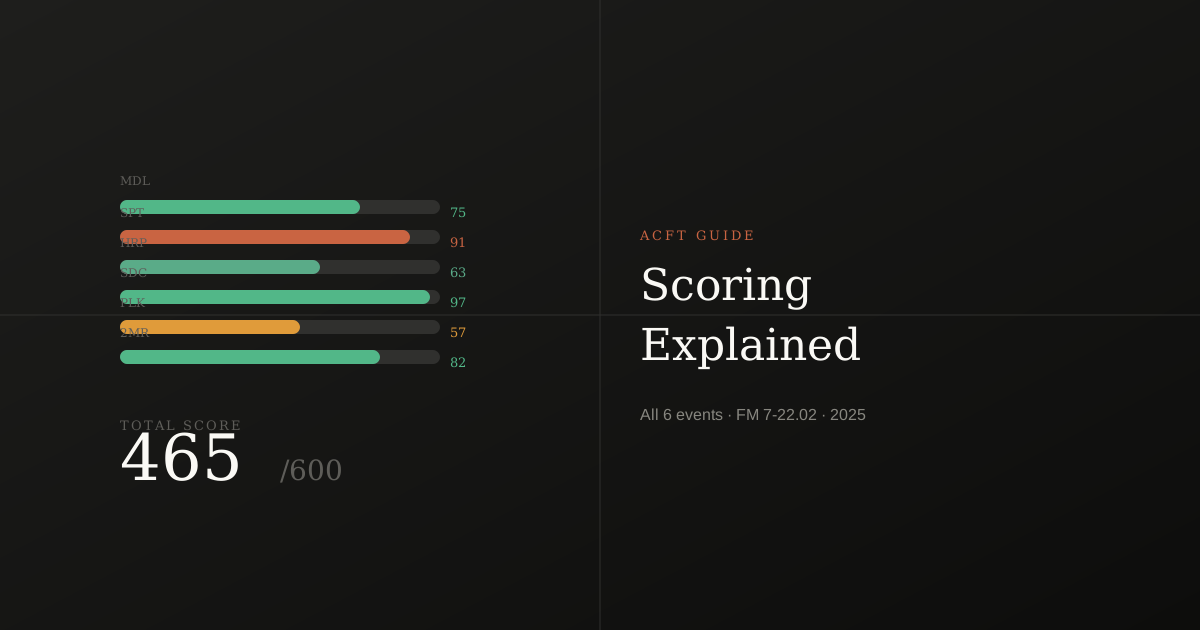
ACFT Scoring Guide: How the Army Fitness Test is Scored
Complete breakdown of all 6 ACFT events: scoring tables, pass/fail criteria, linear interpolation, a…
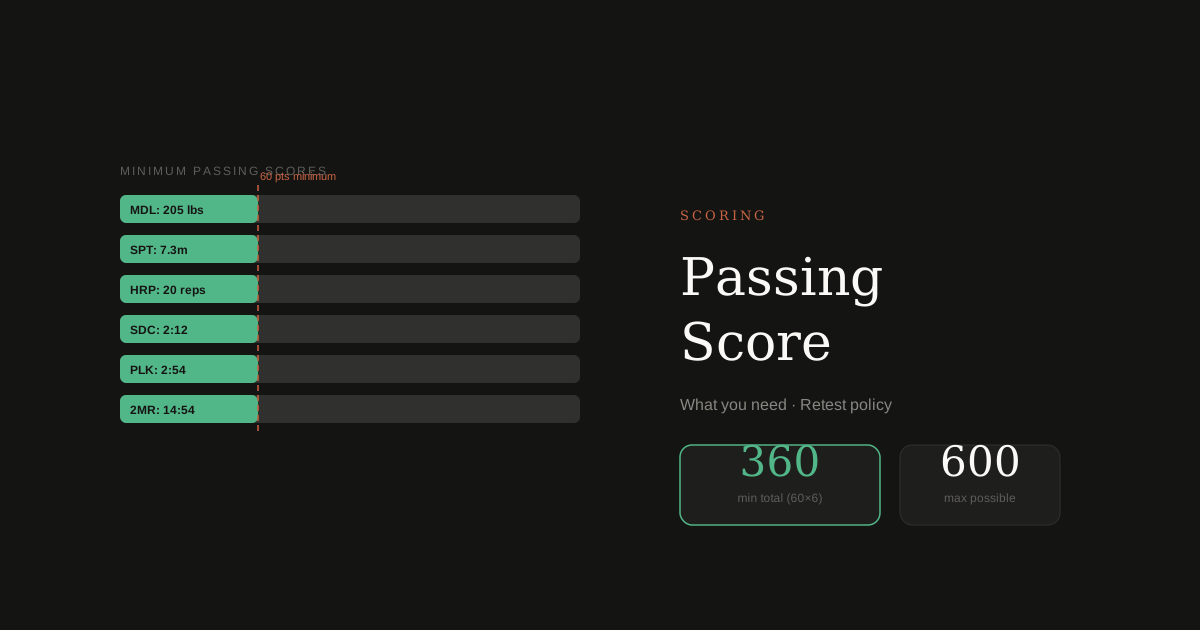
ACFT Passing Score: Minimums, Requirements & Retest Policy
Everything you need to know about ACFT minimum scores, per-event passing thresholds, what a perfect …
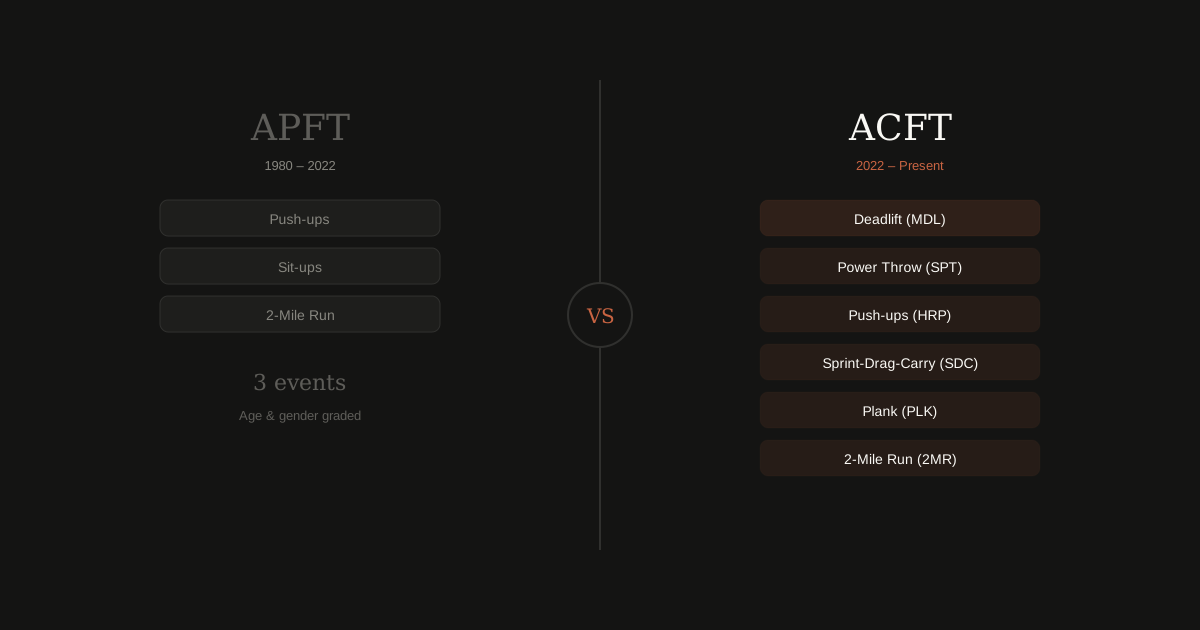
ACFT vs APFT: What Changed and Why It Matters
Side-by-side comparison of ACFT vs APFT: history, event differences, scoring philosophy, what got ha…